
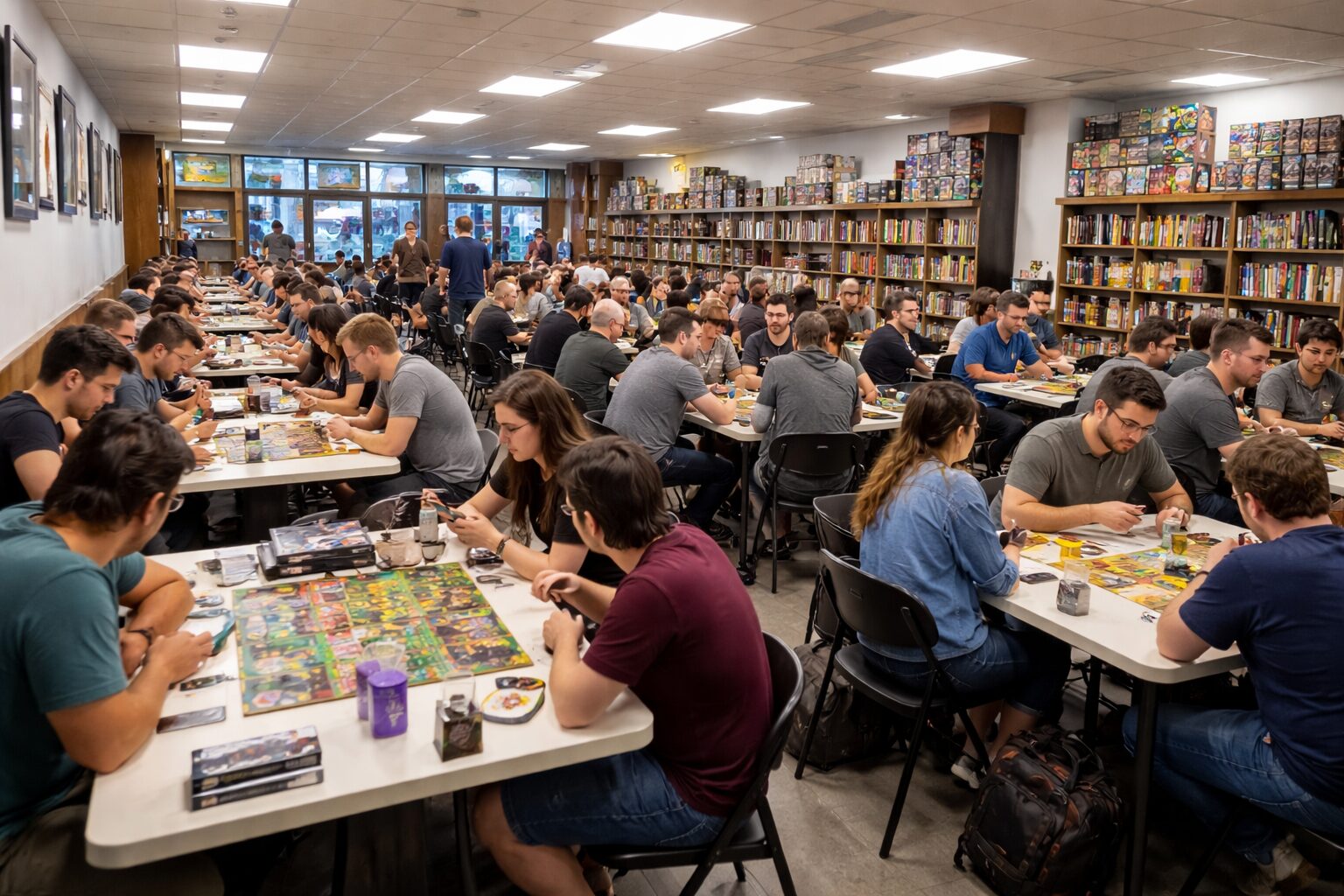
Looky here. A huge library of games, clear sightlines, plenty of seating. On a busy Friday night, it works. The crowd arrives, social proof takes over, and the room hums. The owner arranged the space with good intentions, to maximize capacity for the weekend surge.
But watch what happens on a quiet Tuesday afternoon. A solo customer or a quiet pair pauses at the glass, looks into the empty room, and keeps walking.
What the Room Is Currently Saying
Look at the plan, not the decor. The room is one large field of tables. Long communal setups run in parallel rows through the center. Chairs face each other in exposed lanes. Almost every seat is visible from the front door.
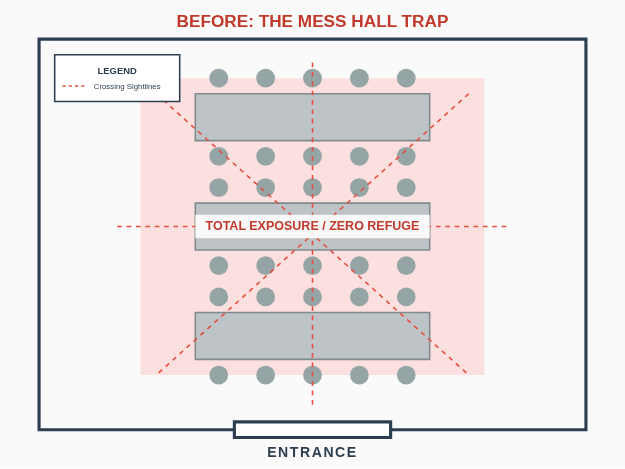
On a quiet weekday, that geometry sends a rigid signal: come with purpose, commit publicly, and be ready to be seen.
The room is not offering a soft arrival. It is asking the entrant to become the event.
The OED Read
The main failure here is Optionality. The room offers one mode of use: full participation in public. There is no gradient between walking in and settling into a multi-hour game session. No perch. No browse zone. No low-commitment edge.
In Jay Appleton’s prospect-refuge terms, the room offers prospect without refuge. You can see everything, but you are also highly seen. On a packed night, the crowd itself softens that exposure. On an empty afternoon, the first customer carries the whole burden of being visible.
That is where Lisa Feldman Barrett’s frame helps. The nervous system is always making predictions about effort and exposure. A room like this makes being first feel metabolically expensive. Not dangerous, exactly. Just costly. The brain reads the awkwardness before the person sits down.
This is the First-Mover problem. These rooms are designed to hold a gathering once it exists. They are not designed to help the gathering begin.
The Fix
You do not need new furniture. You need a gradient.
Pull two smaller tables out of the mess-hall grid and anchor them sideways near the front wall. Turn the chairs so the sitter has a protected back and a clear view into the room. Create one low-commitment landing zone for browsing, coffee, or a quick two-person game.
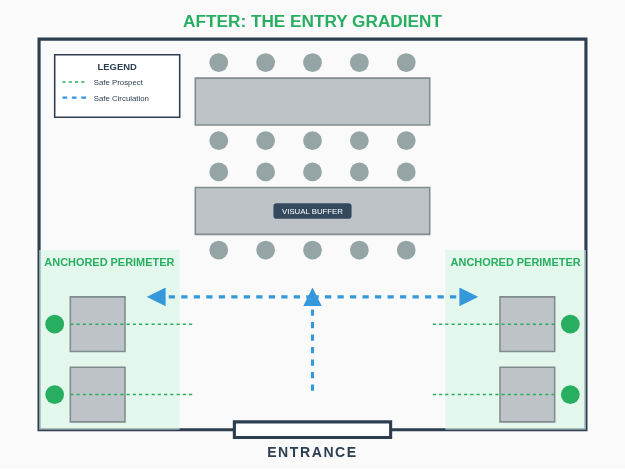
Do not make every customer enter as a full player. Let some of them enter as a browser first.
The Business Implication
Lower the autonomic cost of being first, and you increase the odds that someone stays. The first body in the room creates permission for the second. The second makes the room visible as active from the street.
That is how you begin flattening the weekend-weekday swing, not by adding marketing first, but by making the threshold easier for a nervous system to cross.
The Scene
A curious local steps in on a quiet afternoon, takes the anchored seat by the wall, flips through a game menu, orders a coffee, and stays. Twenty minutes later, the room no longer looks empty from the sidewalk.
Your room is already telling people whether to stay or go. Most owners never hear it.
For $97, I’ll tell you exactly what it’s saying, why, and what to move to change the message. You get a full written diagnosis within a week. No renovation, no new furniture, no guesswork. Order now.